
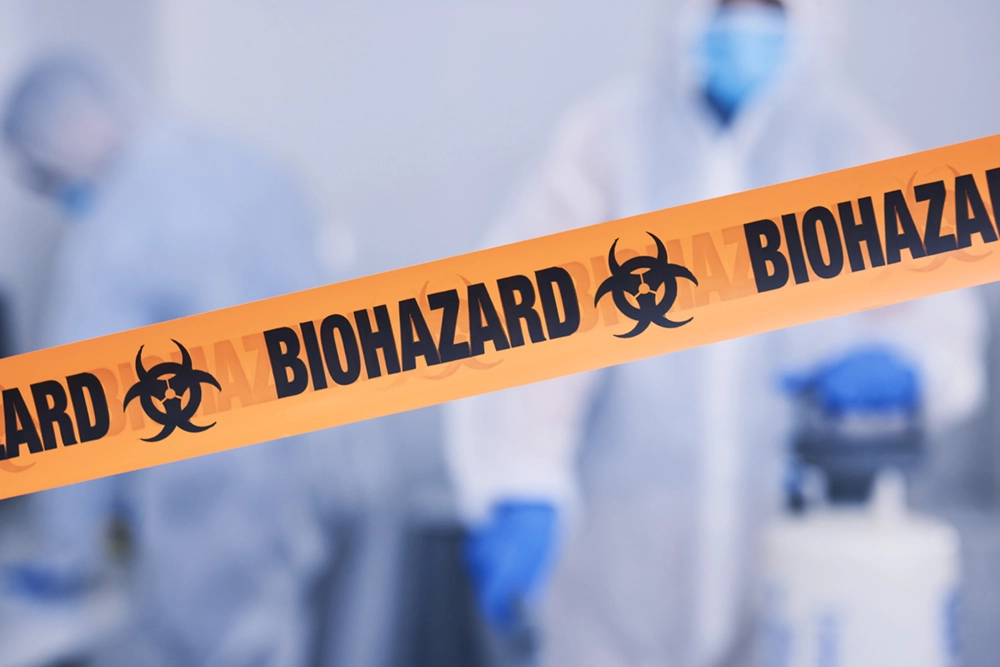
A biohazard incident can put your staff, operations, and reputation at risk in an instant. Knowing how to respond quickly and safely can help protect your workplace, meet regulatory requirements, and get your business back on track.
What Are Biohazards?
Biohazards are substances that pose a threat to human health, and can include blood, bodily fluids, human waste, chemicals, infectious agents, or any substance that could be contaminated with micro-organisms such as bacteria, viruses, and other pathogens that can cause disease.
The occurrence of biohazards in the workplace requires specialized cleaning procedures to prevent contamination and the spread of disease. For Canadian businesses, understanding the protocols and legal requirements for biohazard cleanup is essential, not only for regulatory compliance but also to foster a safe and productive workplace.
How Biohazards Occur in the Workplace
The presence of biohazards in the workplace can result from various circumstances, including:
- medical emergencies
- workplace and industrial accidents
- chemical spills
- accidental exposure to infectious materials
- exposure to airborne pathogens
- crime and trauma scenes
Improper handling of biohazardous materials can lead to serious health consequences, such as infection, allergic reactions, and chemical poisoning. Beyond health concerns, businesses may also face legal liabilities, reputational damage, and even potential closure if biohazard incidents are not managed properly. This is why, in most situations, contracting a certified biohazard cleanup company is advised.
Legal and Regulatory Considerations
In Canada, employers must adhere to occupational health and safety regulations, including the Workplace Hazardous Materials Information System (WHMIS), as well as federal and provincial standards which require employers to maintain a safe work environment that includes effective biohazard management.
Federal and provincial laws and regulations require that blood removal and biological cleaning technicians be trained to properly remove contamination from an affected property. Failure to comply can result in fines, legal action, and increased scrutiny from regulatory bodies. Regular staff training and clearly defined biohazard response protocols are also essential for legal compliance and risk mitigation.
When to Use Professional Biohazard Cleanup Services
While minor spills or incidents may be managed by trained staff, larger or more complex biohazard situations require professional intervention. Certified biohazard cleanup technicians have the specialized training, equipment, and knowledge to safely remediate biohazardous conditions. They also ensure compliance with federal and provincial regulations, and they are certified and trained in the following procedures:
- Biohazard removal
- Proper biohazard waste disposal
- Decontamination procedures
- Disinfection and odour removal
Biohazard Cleanup Protocols
Biohazard incidents can occur unexpectedly in any workplace. A professional cleanup team has the expertise, equipment and established protocols needed to respond safely and effectively to each situation. Although procedures vary depending on the circumstances, the cleanup process typically includes:
Assessment and Containment: Immediate identification and assessment of the affected area. Restriction of access to contain the location and prevent further exposure.
Personal Protective Equipment (PPE): All technicians and cleanup crews wear the appropriate PPE, such as gloves, masks, eye protection, and disposable coveralls.
Removal and Safe Disposal of Contaminants: Safe collection and disposal of biohazardous materials using approved regulatory methods and specialized containers (e.g., biohazard bags).
Cleaning, Disinfection, and Odour Removal: Cleaning and disinfection of all affected surfaces, using disinfectants that meet Health Canada standards. Focused attention to high-touch areas such as doorknobs, desks, and washrooms.
Final Inspection and Documentation: A thorough inspection to ensure that all hazards have been removed. Documentation of the incident and cleanup process for regulatory compliance and future reference.
Preventive Biohazard Strategies for Businesses
- Develop and implement a comprehensive biohazard response plan.
- Conduct regular staff training on biohazard identification and response.
- Maintain ample supplies of PPE and cleaning materials.
- Schedule routine inspections of washrooms, kitchens, and high-risk areas.
- Establish partnerships with certified biohazard cleanup providers.
If a biohazard incident affects your business, ServiceMaster Restore provides professional biohazard cleanup in accordance with all applicable laws and standards. Our fully trained technicians respond quickly and work discreetly and efficiently to restore your business property to a clean and safe environment.